
S’il est des œuvres dont le destin semble suspendu dans le temps, La Damnation de Faust appartient indubitablement à cette catégorie. Légende dramatique et projet visionnaire, Berlioz mit près de vingt ans à achever l’ouvrage à la limite du grand opéra et du poème symphonique. D’emblée fasciné par la traduction du Faust de Goethe faite par Gérard de Nerval, Berlioz sera longtemps hanté par la mise en musique de la légende. L’œuvre des Huits Scènes de Faust est d’ailleurs l’une des premières œuvres écrites par le compositeur en 1828 et forme le noyau de La Damnation de Faust qui sera crée en 1846.
Pour servir cette œuvre majeure qui sera donnée aux BBC Proms dans sa version de concert, Les Siècles retrouvent le chef Jakob Lehmann et s’entourent d’artistes d’exception, dont le ténor américain – John Osborn – qui endossera le rôle de Faust, sans doute parmi les plus exigeants du répertoire lyrique français.

PROGRAMME
Hector BERLIOZ (1803-1869)
La Damnation de Faust
Légende dramatique en quatre parties
Sur instruments français du début du 19e siècle
CALENDRIER
31.10.25 – PARIS, Théâtre des Champs-Élysées
avant-première jeunes -30 ans
03.11.25 – PARIS, Théâtre des Champs-Élysées
06.11.25 – PARIS, Théâtre des Champs-Élysées
12.11.25 – PARIS, Théâtre des Champs-Élysées
15.11.25 – PARIS, Théâtre des Champs-Élysées
30.08.26 – LONDRES, BBC Proms, Royal Albert Hall (version de concert)
DISTRIBUTION
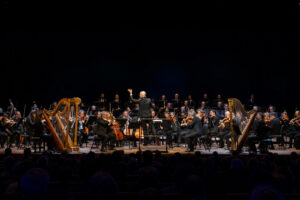
Jakob Lehmann, direction
Les Siècles
Chœur de Radio France | Lionel Sow, direction
Maîtrise de Radio France | Marie-Noëlle Maerten, direction
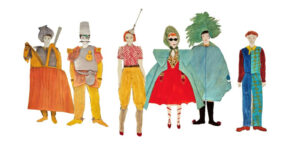
Silvia Costa, mise en scène, scénographie, costumes
Simon Hatab, dramaturgie
Michele Taborelli, scénographie
Marco Giusti, lumières
Novembre 2025
Benjamin Bernheim, Faust
Viktoria Karkacheva, Marguerite
Christian Van Horn, Méphistophélès
Thomas Dolié, Brander
Août 2026
John Osborn, Faust
Véronique Gens, Marguerite
Gérald Finley, Méphistophélès
Thomas Dolié, Brander

Les Siècles did many gorgeous things with Berlioz’s “dramatic legend”. They were conducted by Jakob Lehmann and the performance he helmed was intricate and mostly compelling. Brighter textures built by Lehmann pushed the inner orchestra voices forward. There were beautifully balletic interludes including a prancing Hungarian March.
Neil Fisher, The Times
The orchestral sound had extraordinary lucidity and beauty, almost modern but intangibly other-worldly. The principal viola accompanied Marguérite’s unforgettable aria “Autrefois un roi de Thulé” with unusual eeriness while the woodwinds, especially the flutes and cor anglais, had a vivid limpidity that filled the Royal Albert Hall like a cinematic sound system.
Mark Valencia, Bachtrack
What struck – and charmed – from first to last was the distinctive period colouring of the Les Siècles players as they negotiated all of Berlioz’s weird and wonderful orchestral shades, from chirping piccolos, gracefully untamed natural horns and a magical quartet of historically-informed harps down to the growling sub-tuba ophicleide. Reedy, breathy, woody, closer to the human voice and to the earth Faust invokes, somehow pre-industrial: this transparency, almost nakedness, of sound fitted a work that, in Faust’s doomed search for meaning and fulfilment, presents a Romantic ideal of authentic feeling that the anomic intellectual can never quite attain.
Boyd Tonkin, theartsdesk.com
Les Siècles’ period instruments brought their own grainy texture to the palette, from the chattering piccolos representing Méphistophélès’s malignant spirits and the silky violin swoops lulling Faust to sleep, down to the inclusion in the orchestra of an ophicleide. (…) The Hungarian March sounded snappy, as did the brass fanfares, echoed at one point by a small band up in the gallery.
Erica Jeal, The Guardian
By turns ravishing & spine-tingling: period instrument orchestra Les Siècles is the star of the show in Berlioz’s La damnation de Faust at the BBC Proms conducted by Jakob Lehmann. (…) Lehmann seemed to relish the ability of the orchestra to be quiet, to produce a web of sound. The Dance of the Sylphs was one such moment, where the ravishing orchestral textures made you forget that the movement feels dramatically redundant! In fact, there was so much orchestral detail that Lehmann and his players held you spellbound.
Robert Hugill, Planet Hugill
The use of original instruments gave us a painterly canvas consisting of myriad colours, and brightnesses. Against the tenor voice was an orchestral tapestry surely never heard in this piece in this hall before, thanks to conductor Jakob Lehmann’s careful untangling of strands. (…) Woodwind doublings were revelatory, creating new multi-instruments; and how effective Berlioz’s scoring came across as in Méphistophélès’s evocation of dark spirits. Lehmann not only excelled on the minute-by-minute level, but also appreciated the narrative trajectory, with tempo changes impeccable.
Colin Clarke, Opera Today


